
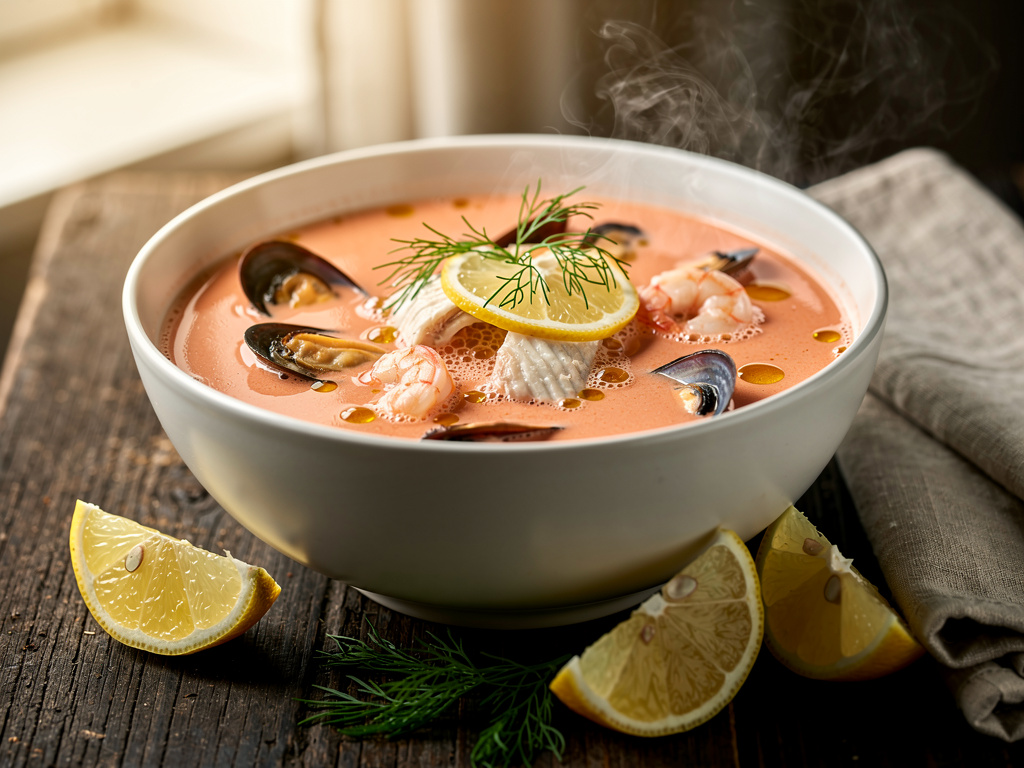
This hot and sour seafood soup is Thai cooking refined to its elegant essence. It's a lighter, more delicate cousin of the famous Tom Yum—a crystal-clear broth infused with lemongrass, galangal, and kaffir lime leaves, made bright with fresh lime juice, and laden with succulent prawns and tender fish.
At just 185 calories per serving with 28 grams of protein, it's the kind of soup you can eat a generous bowl of without any guilt. The heat from chilies, the sourness from lime, the savory depth from fish sauce, and a touch of sweetness all dance together in perfect balance.
The Art of Thai Flavor Balance
Thai cooking is all about balance. In this soup, four key elements must harmonize: sour from lime, heat from chilies, salty from fish sauce, and sweet from sugar. None should dominate—instead, they create a complex flavor where each taste enhances the others.
The amounts in this recipe are guidelines. Always taste and adjust. Too sour? Add more sugar. Lacking depth? More fish sauce. Not spicy enough? More chilli. The goal is a broth that hits every note on your palate.
The Holy Trinity of Thai Aromatics
Lemongrass, galangal, and kaffir lime leaves are the aromatic foundation of Thai soups. These ingredients infuse the broth with an incredible depth of flavor that dried herbs or substitutes simply cannot replicate.
Lemongrass: Bruise the stalks with the back of a knife to release the essential oils. Use only the white bottom section—the green tops are too fibrous.
Galangal: Often confused with ginger, galangal has a distinct piney, citrusy quality. It's less fiery than ginger but more aromatic. Find it at Asian grocers fresh, frozen, or in jars.
Kaffir Lime Leaves: These glossy, figure-eight shaped leaves add an intense citrus fragrance. Tear them to release their oils. Fresh or frozen work well; dried are a poor substitute.
Choosing Your Seafood
For the fish, choose any firm white variety that holds its shape in hot broth. Snapper, barramundi, cod, halibut, and sea bass are all excellent choices. Avoid delicate, flaky fish like sole or flounder—they'll fall apart.
For prawns, green (raw) prawns are essential. They cook quickly in the hot broth, curling into perfect pink crescents. Pre-cooked prawns can be used but will be less tender.
Enoki Mushrooms: The Delicate Touch
Enoki mushrooms add textural interest without competing with the seafood. Their long, thin stems and tiny caps have a mild, slightly fruity flavor and a pleasant crunch. They cook in just a minute—any longer and they become slimy.
If you can't find enoki, substitute with oyster mushrooms or straw mushrooms. Regular button mushrooms work but lack the delicate character.
The Importance of Timing
Seafood overcooks quickly and becomes rubbery. Add the fish and prawns to the simmering broth and watch them carefully—3-4 minutes is usually enough. The prawns should just curl and turn pink, and the fish should be opaque throughout but still tender.
Add the lime juice off the heat. Boiling destroys its fresh, bright character. The residual heat is enough to incorporate it without dulling the flavor.
A Healthy Choice
This soup is naturally low in calories and fat while being high in protein—perfect for anyone watching their intake without wanting to sacrifice flavor. The clear broth, lean seafood, and minimal oil make it one of the healthiest soups in any cuisine.
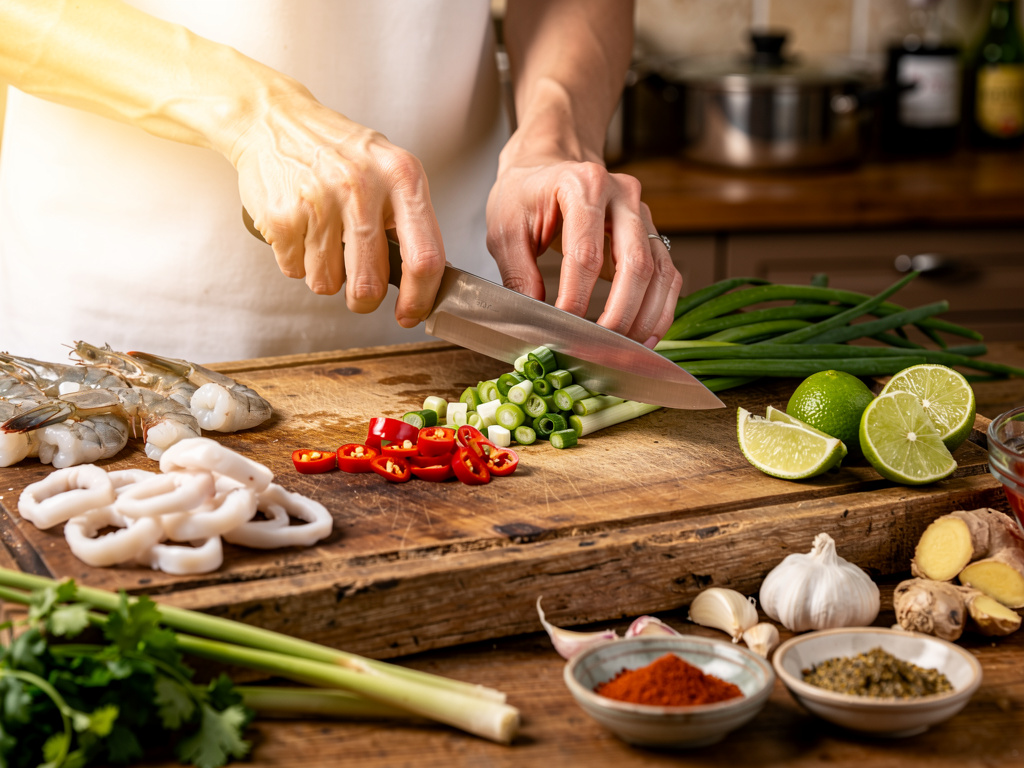
Hot and Sour Seafood Soup
Tangy Thai-inspired soup with succulent prawns, tender white fish, and delicate enoki mushrooms in a fragrant lemongrass and galangal broth.
Nutrition per serving
Ingredients
Instructions
- Make broth. Bring fish stock to a boil with lemongrass, kaffir lime leaves, galangal, and chilies. Simmer for 10 minutes.
- Add seafood. Add fish pieces and prawns. Cook for 3-4 minutes until seafood is just cooked.
- Add mushrooms. Add enoki mushrooms and cook for 1 minute.
- Season. Remove from heat. Stir in lime juice, fish sauce, and sugar. Adjust to taste.
- Serve. Ladle into bowls and garnish with fresh coriander.
Recipe Notes
- Don't eat the aromatics: Lemongrass, galangal, and lime leaves are for flavor only—push them aside when eating.
- Fish substitutions: Use any firm white fish—snapper, barramundi, cod, halibut, or sea bass.
- Make it spicier: Add more chilies, bird's eye chilies, or a spoonful of Thai chilli paste.
- Mushroom options: Straw mushrooms or oyster mushrooms can replace enoki.
More Seafood Soups Recipes
Italian Sausage Soup
Hearty Italian-style soup with spicy sausages, potatoes, tomatoes, and savoy cabbage. Comfort food a...
Italian Wedding Soup
A beloved Italian-American soup featuring tender mini chicken meatballs, small pasta, and fresh gree...
Italian Meatball Soup
Tender beef meatballs in a rich tomato broth with risoni pasta, zucchini, and green beans. A hearty ...