
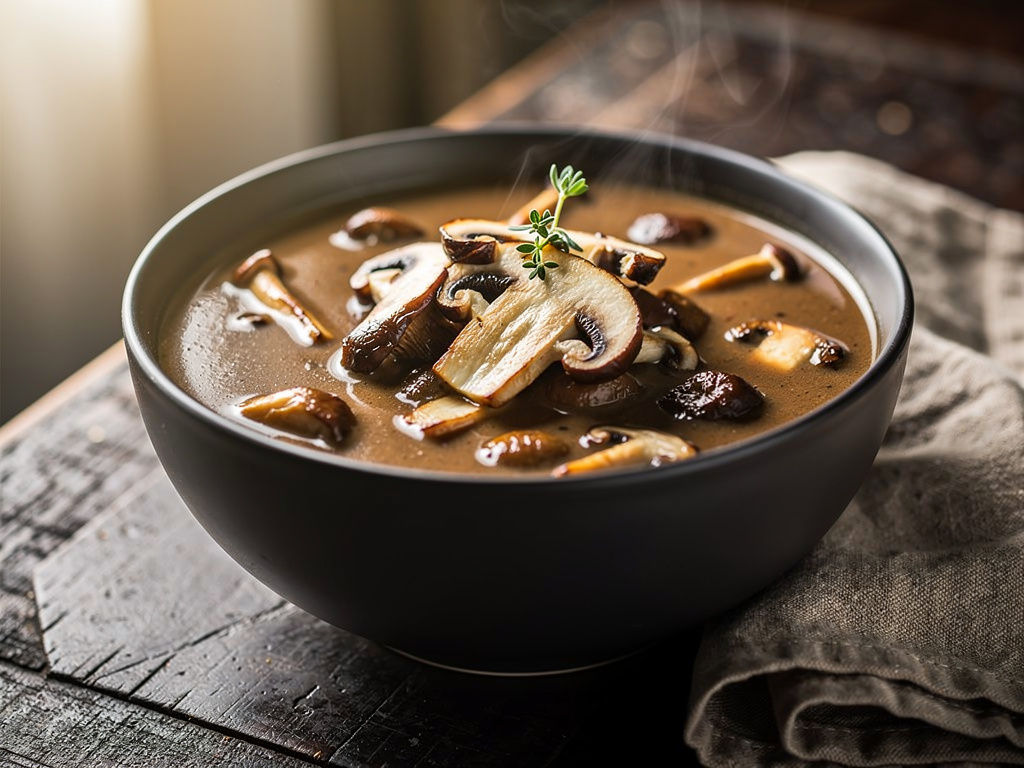
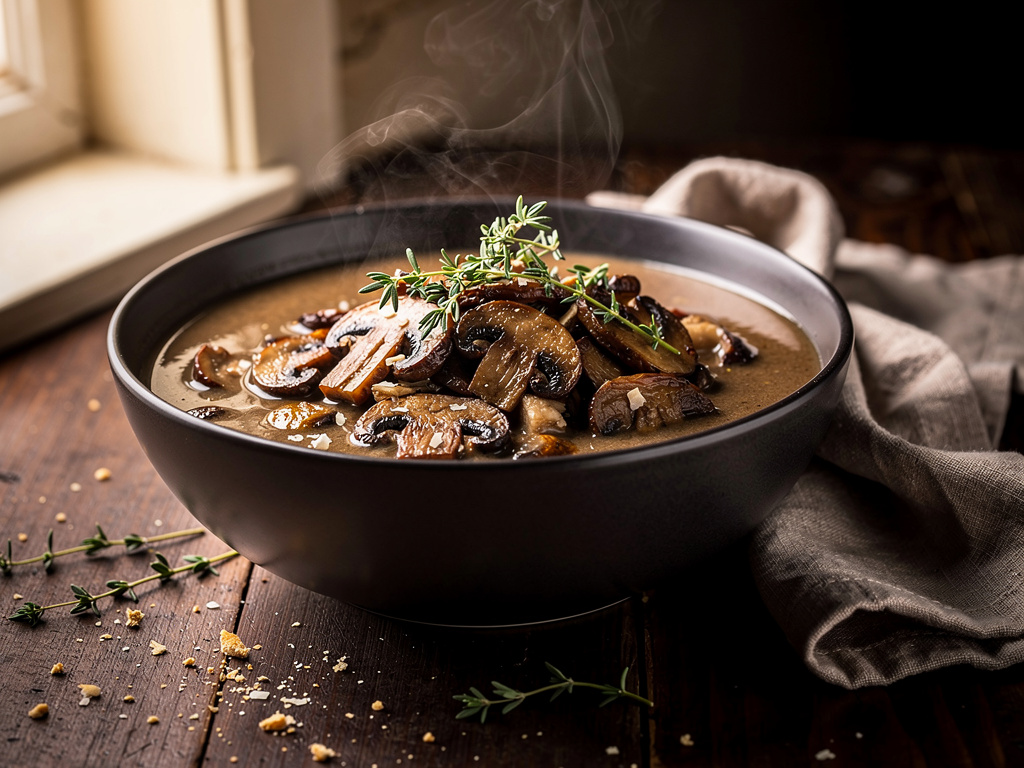
There's something deeply soul-warming about Korean Mushroom Soup (Beoseot-guk) that goes beyond its simple ingredients. This isn't just any mushroom soup – it's a masterclass in building umami layers, where toasted sesame oil mingles with the oceanic depth of anchovy-kelp broth, creating a harmony that's both complex and comforting. The silky ribbons of beaten egg that bloom like flowers in the hot broth add a luxurious texture that transforms this humble soup into something truly special.
In Korean households, beoseot-guk represents the art of making something extraordinary from everyday ingredients. Unlike heavy, cream-based Western mushroom soups, this Korean version celebrates the pure, earthy essence of mushrooms while the traditional anchovy-dashima broth provides a clean, mineral backbone that enhances rather than masks the delicate mushroom flavors. It's comfort food that nourishes without weighing you down, embodying the Korean philosophy of food as medicine.
The Magic of Anchovy-Kelp Broth Foundation
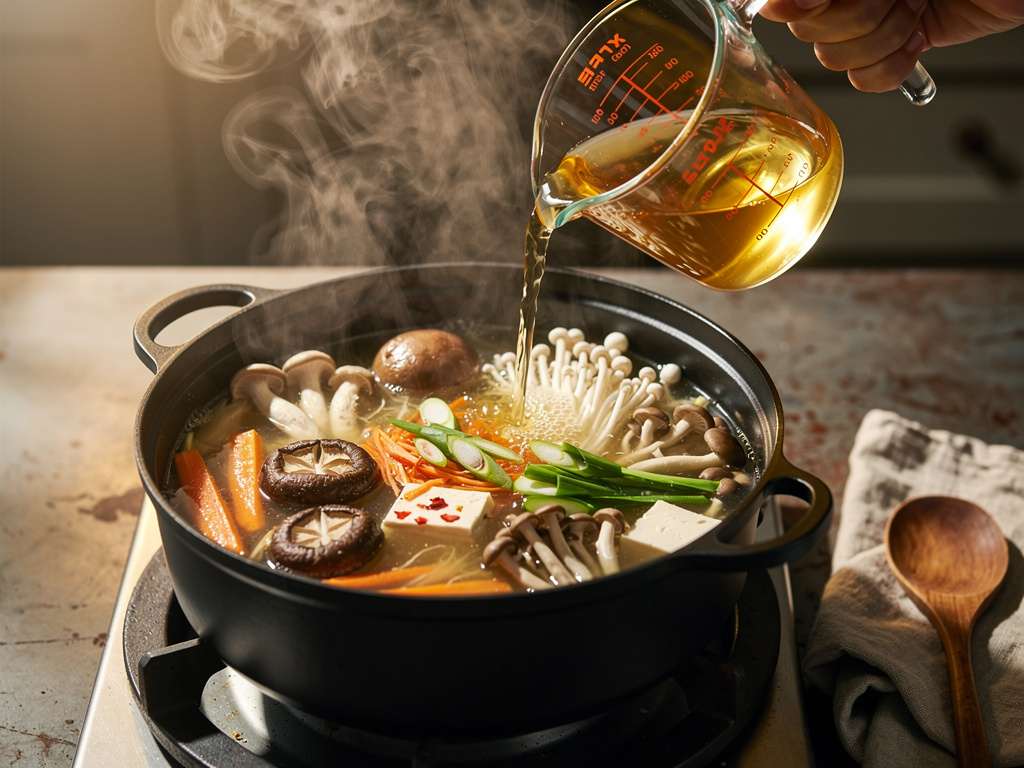
The secret to authentic Korean Mushroom Soup lies in its liquid gold base – the anchovy and kelp broth that forms the soul of countless Korean soups. This isn't just flavored water; it's a carefully constructed foundation that requires removing the heads and guts from dried anchovies to avoid bitterness. The 4-inch piece of dried kelp (dashima) works in perfect partnership, releasing natural glutamates that create an almost meaty richness without any meat at all. This umami-packed broth is what separates authentic Korean mushroom soup from simple mushroom and water combinations, providing a depth that makes each spoonful incredibly satisfying.
Key Ingredients & What Makes Them Special
The star of this soup is the pound of mixed Asian mushrooms, which brings textural variety and complex earthiness that single-mushroom soups simply can't match. Shiitake mushrooms provide meaty chewiness and deep flavor, while oyster mushrooms add silky texture, and enoki mushrooms contribute delicate sweetness. The key technique of sautéing these mushrooms with garlic before adding them to the broth intensifies their flavors through caramelization, creating those beautiful golden edges that add visual appeal and concentrated taste.
Equally important is the beaten egg technique, which requires precise timing and gentle stirring to create those characteristic silky ribbons rather than scrambled chunks. The eggs should be added to gently simmering broth in a thin stream while stirring in one direction, creating the ethereal texture that makes this soup so comforting. The combination of sesame oil and vegetable oil serves dual purposes – the vegetable oil handles the high-heat sautéing while the sesame oil provides that distinctive nutty finish that's essential to Korean cuisine.
Pro Tips for the Best Results
- Don't skip the anchovy prep: Removing heads and guts from dried anchovies takes just minutes but prevents the bitter, fishy taste that can ruin your broth
- Toast your sesame oil briefly: Heat the sesame oil in the pan for just 30 seconds before adding other ingredients to awaken its nutty aroma
- Slice mushrooms uniformly: Keep slices about ¼-inch thick for even cooking and optimal texture in each spoonful
- Control your egg stream: Pour beaten eggs in the thinnest possible stream while stirring the soup in one direction to create perfect silky ribbons
- Save some green onions: Reserve half the sliced green onions to add fresh color and mild bite just before serving
Variations & Substitutions
For vegetarians, replace the anchovy broth with a robust mushroom stock made from mushroom stems and dried shiitake, or use kombu-only broth for a lighter version. Those avoiding eggs can skip them entirely and add extra mushrooms or soft tofu cubes for protein. If Asian mushrooms aren't available, substitute with a mix of cremini, button, and portobello mushrooms, though the flavor profile will be milder. For a heartier version, add thin slices of soft tofu or rice cakes (tteok) during the last few minutes of cooking.
Spice lovers can incorporate a small amount of gochugaru (Korean red pepper flakes) or a spoonful of kimchi juice for gentle heat and additional fermented flavors. The soup also works beautifully with the addition of glass noodles (dangmyeon) for a more substantial meal.
Serving Suggestions
Korean Mushroom Soup shines as both a starter and a main course, depending on accompaniments. Serve it alongside steamed rice and kimchi for a traditional Korean meal, or pair it with Korean pancakes (pajeon) for a satisfying combination of textures. The soup also makes an excellent light dinner when served with seasoned bean sprouts (kongnamul) and pickled radish as banchan (side dishes). For a modern twist, serve it in shallow bowls with a drizzle of extra sesame oil and a sprinkle of toasted sesame seeds.
Storage & Make-Ahead Tips
This soup actually improves in flavor after a day as the mushrooms continue to infuse the broth. Store in the refrigerator for up to three days, but note that the egg ribbons may break down slightly upon reheating. For best results, make the broth and mushroom base ahead of time, then add fresh beaten eggs when reheating and serving. The soup freezes well for up to two months, though again, it's best to add fresh eggs after thawing and reheating. When meal prepping, consider storing the broth and sautéed mushrooms separately from any eggs or green onions, adding these fresh elements when ready to serve for optimal texture and flavor.
Korean Mushroom Soup
A comforting Korean soup (Beoseot-guk) featuring toasted sesame and soy-infused mushrooms. Authentic Korean comfort.
Nutrition per serving
Ingredients
Instructions
- . Make anchovy-kelp broth.
- . Sauté mushrooms with garlic.
- . Add broth and simmer.
- . Add beaten egg. Finish with sesame oil.
Recipe Notes
- Vegetarian: Use kombu dashi (kelp only) or vegetable broth.
- Add protein: Tofu cubes make it heartier.
- More umami: Add a splash of fish sauce.
- Spicy version: Add gochugaru (Korean red pepper flakes).
More Mushroom Soups Recipes
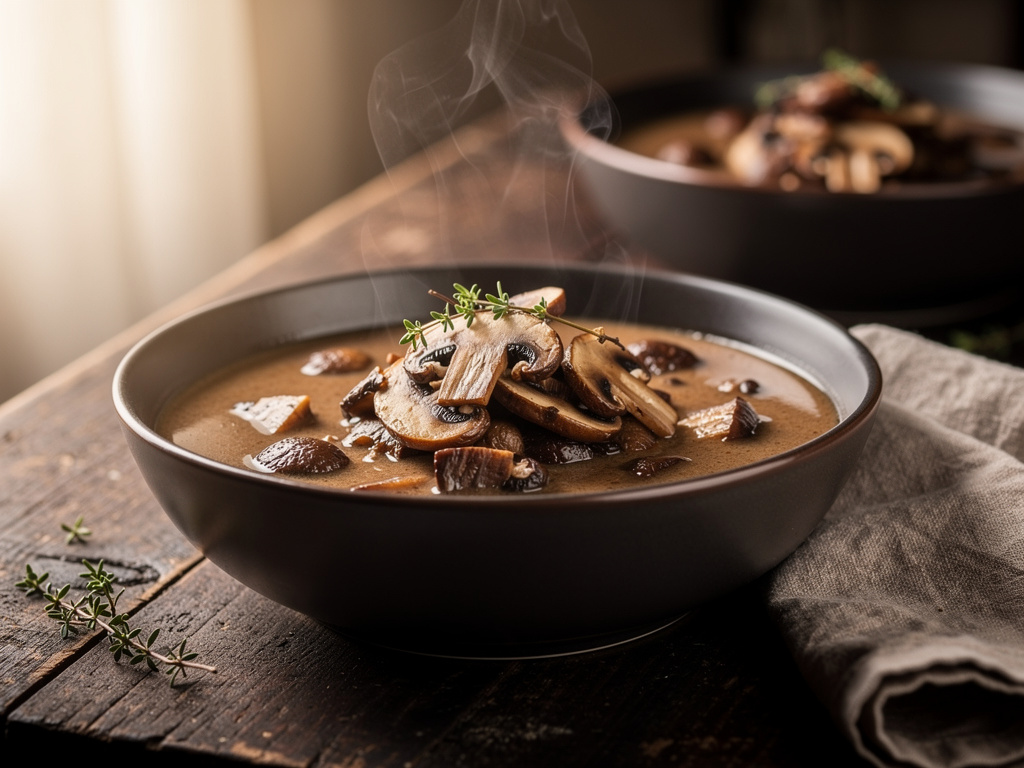
Hot and Sour Mushroom Soup
A tangy, spicy Chinese classic loaded with mushrooms. Bold flavors that wake up your taste buds....
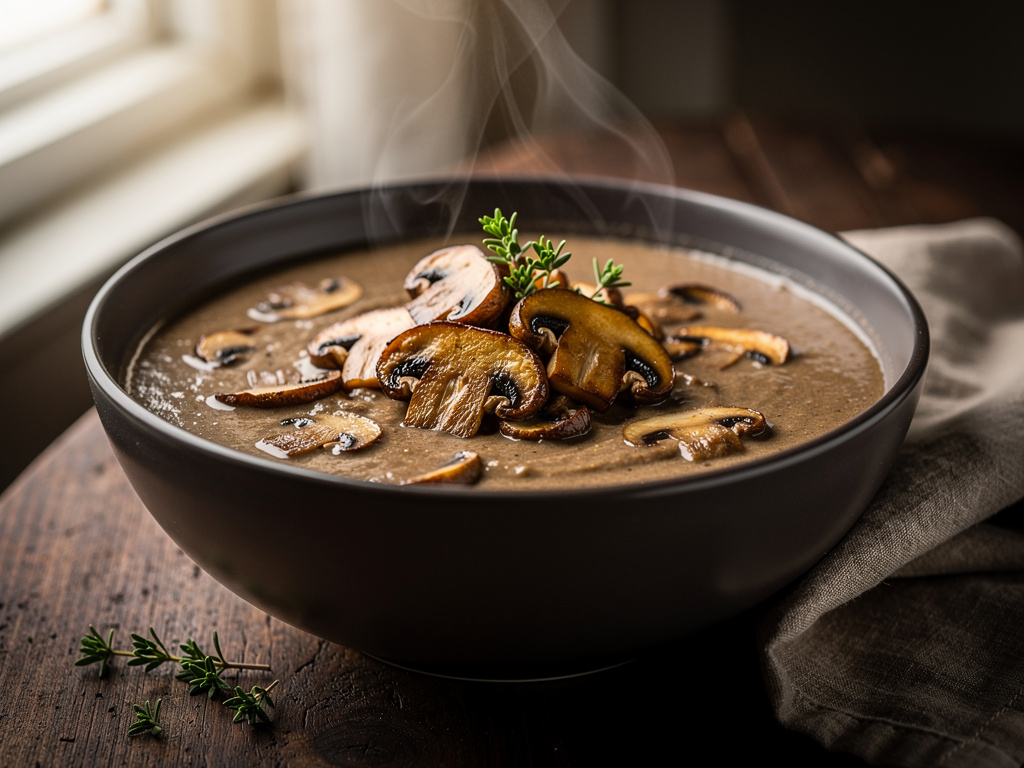
Instant Pot Mushroom Soup
Rich, creamy mushroom soup made fast in your pressure cooker. Weeknight comfort in minimal time....
Mushroom Coconut Soup
A creamy, Thai-inspired soup featuring rich coconut milk and earthy mushrooms. Dairy-free comfort....