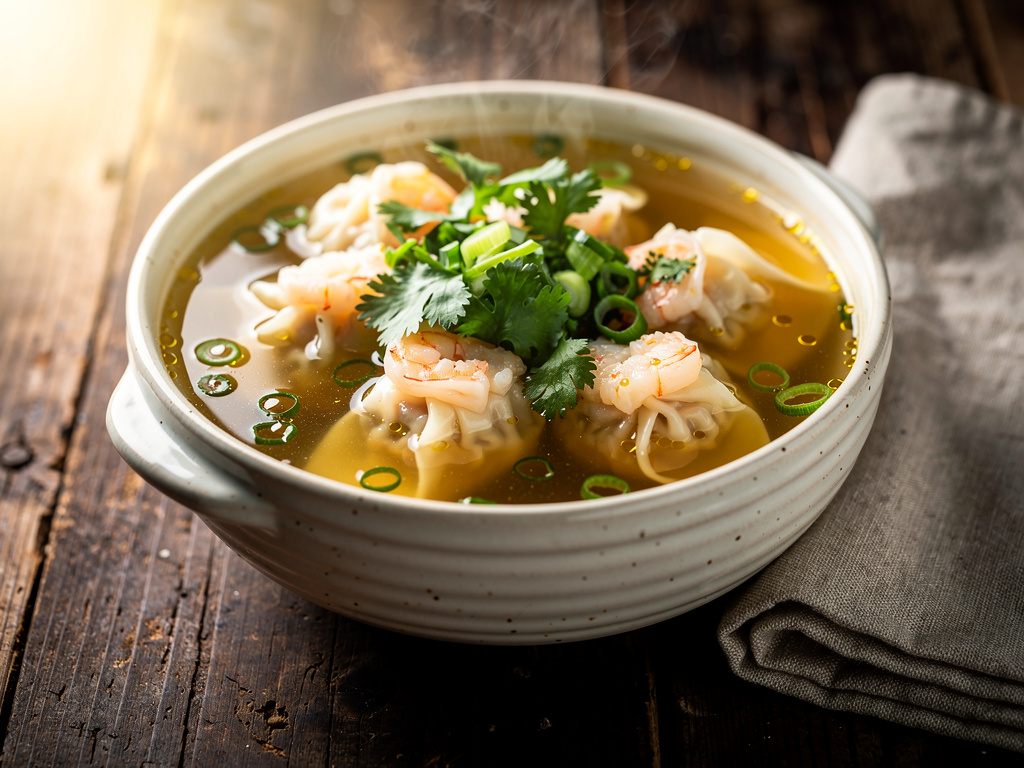
This prawn and wonton soup delivers authentic Chinese restaurant flavor in just 20 minutes. With plump wontons bobbing in fragrant ginger broth alongside juicy prawns, glossy char siu pork, and crisp bok choy, it's comfort food at its finest - and remarkably easy to make at home.
The secret is using quality frozen wontons and letting simple, fresh ingredients shine. A trip to your local Asian grocery sets you up for restaurant-quality soup that tastes like you spent hours in the kitchen.
The Art of Quick Chinese Soup
Chinese soups are masters of efficiency. Rather than slow-simmering for hours, they rely on quality stock and the right balance of aromatics to create deeply satisfying dishes in minutes. This wonton soup exemplifies that approach.
Everything cooks in stages to ensure perfect texture: wontons first (they need the most time), then mushrooms, then quick-cooking prawns and pork, and finally delicate bok choy that needs only a minute to wilt. The result is a soup where every element is cooked just right.
Choosing Quality Frozen Wontons
The quality of your wontons makes or breaks this dish. Look for frozen wontons at Asian grocery stores - they're far superior to supermarket brands. Here's what to look for:
- Filling type: Pork, prawn, or pork-and-prawn combinations are traditional for soup
- Wrapper thickness: Thin wrappers cook faster and have better texture
- Homemade options: Many dim sum restaurants sell their wontons frozen - these are often the best
- Avoid fried varieties: You want wontons meant for boiling, not pan-frying
Store frozen wontons in the freezer for up to 3 months. Cook them directly from frozen - no thawing needed. They're ready when they float to the surface and the wrappers turn translucent.
The Magic of Char Siu (Chinese BBQ Pork)
Char siu - Cantonese barbecued pork - adds layers of flavor that transform simple soup into something special. Its sweet, savory, slightly charred edges create contrast against the clean broth.
Find char siu at Chinese restaurants and dim sum shops, often hanging in the window, or pre-sliced in Asian grocery refrigerator sections. It's already fully cooked, so it just needs to warm through in the soup.
No char siu? Substitute with:
- Sliced honey-glazed ham
- Roast pork tenderloin
- Crispy bacon bits
- Or simply omit for a lighter soup
The Role of Ginger in Chinese Cooking
Ginger is julienned (cut into thin matchsticks) for this soup rather than sliced. The thin strips infuse the broth quickly and are pleasant to eat, unlike thick slices which are usually eaten around. Julienned ginger also releases its aromatic oils more efficiently.
Fresh ginger is essential - ground ginger won't work here. Look for firm, smooth-skinned ginger without wrinkles. The flavor should be sharp and almost citrusy, not musty or fibrous.
Shiitake Mushrooms: Worth the Upgrade
Fresh shiitake mushrooms bring an umami-rich, meaty element that button mushrooms can't match. Their firm texture holds up in soup without becoming rubbery, and they absorb the flavorful broth beautifully.
Always remove shiitake stems - they're too tough to eat. Save them in your freezer for making vegetable stock later. The caps should be sliced about 5mm thick.
Baby Bok Choy: Adding Fresh Greens
Baby bok choy brings color, crunch, and nutrition to the bowl. Quarter them lengthwise so they stay intact while cooking. Add them last - they only need about a minute to become tender-crisp.
The white stems should be slightly crunchy, the green leaves just wilted. Overcooked bok choy turns army green and mushy, losing both appeal and nutrients.
Finishing Touches: Sesame and White Pepper
Two final ingredients transform good soup into great soup:
Sesame oil adds a distinctive nutty aroma that's quintessentially Chinese. Use it sparingly - a tablespoon is enough. Add it at the end, off the heat, to preserve its delicate flavor.
White pepper is traditional in Chinese soups rather than black pepper. It has a sharper, more nasal heat that cuts through rich broth without the visual specks. Start with 1/4 teaspoon and add more to taste.
Making It a Noodle Soup
Want a heartier meal? Add noodles for a classic won ton mein (wonton noodle soup). Cook thin egg noodles or rice vermicelli separately according to package directions, then divide among bowls before ladling in the soup.
Cooking noodles separately keeps the broth clear and prevents overcooking. It also lets you adjust portions - some want lots of noodles, others prefer mostly soup.
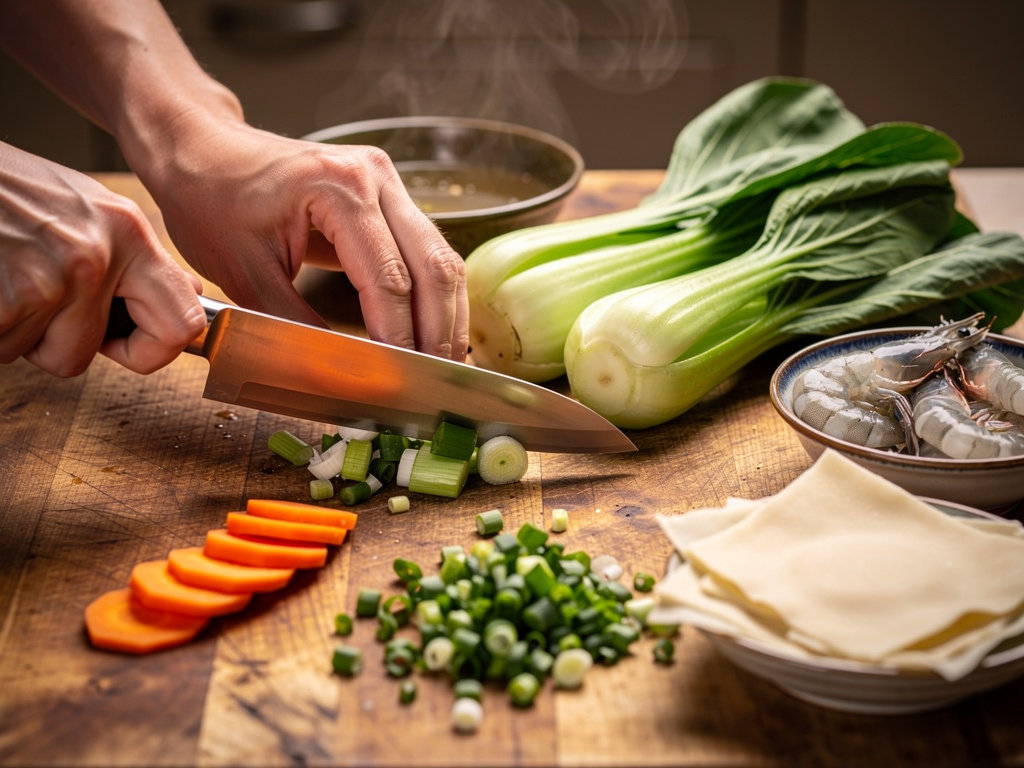
Prawn and Wonton Soup
Quick restaurant-quality Chinese soup with plump wontons, succulent prawns, Chinese BBQ pork, shiitake mushrooms, and fresh bok choy in aromatic ginger broth.
Nutrition per serving
Ingredients
Instructions
- Heat broth. Bring chicken stock to a boil. Add julienned ginger and reduce heat to medium.
- Cook wontons. Add frozen wontons and cook 3-4 minutes until they float to the surface.
- Add mushrooms. Add sliced shiitake mushrooms and cook for 2 minutes.
- Add prawns and pork. Add prawns and sliced BBQ pork. Cook 2 minutes until prawns turn pink.
- Add bok choy. Add bok choy quarters and cook 1 minute until just wilted.
- Season and serve. Remove from heat. Stir in soy sauce, sesame oil, and white pepper. Serve topped with green onions.
Recipe Notes
- Wonton options: Pork, prawn, or vegetable wontons all work beautifully. Mix varieties for interest.
- No BBQ pork? Substitute with sliced ham, bacon, or simply omit for a lighter soup.
- Add noodles: Cook thin egg noodles separately and add to bowls for wonton noodle soup.
- Boost the broth: Add a splash of Shaoxing wine with the ginger for extra depth.
- Make it spicy: Add chili oil or sliced fresh chilies to individual bowls.
More Quick & Easy Recipes
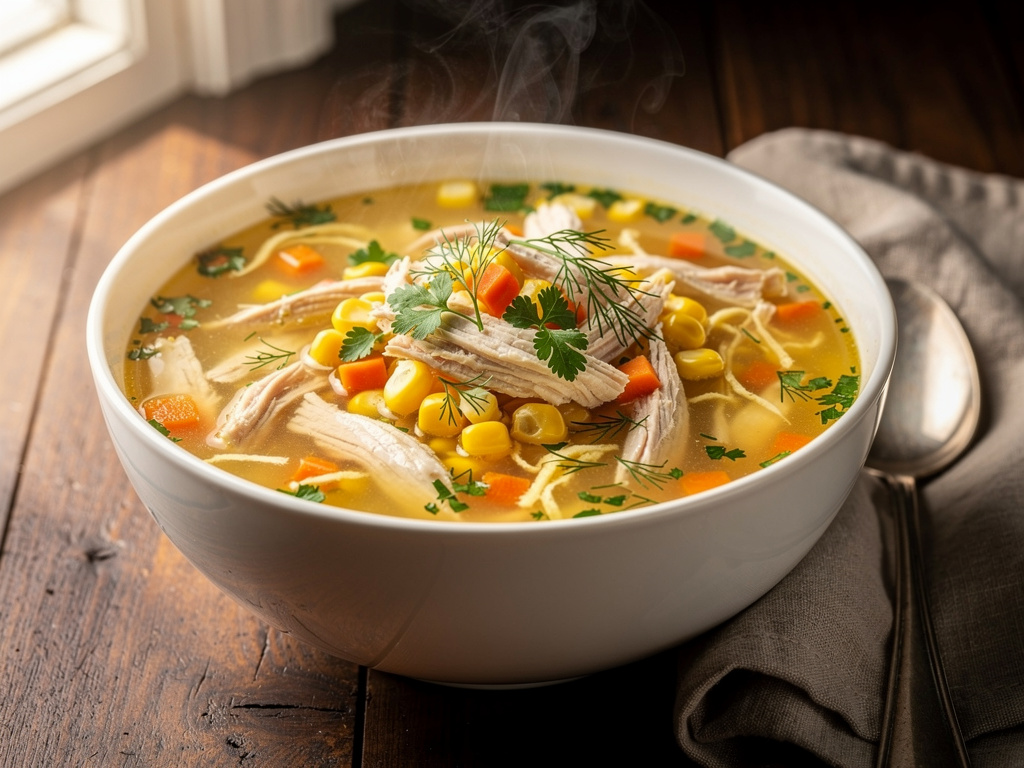
Chinese Chicken Corn Soup
A silky, comforting Chinese soup featuring egg ribbons, sweet corn, and tender chicken. Restaurant-s...
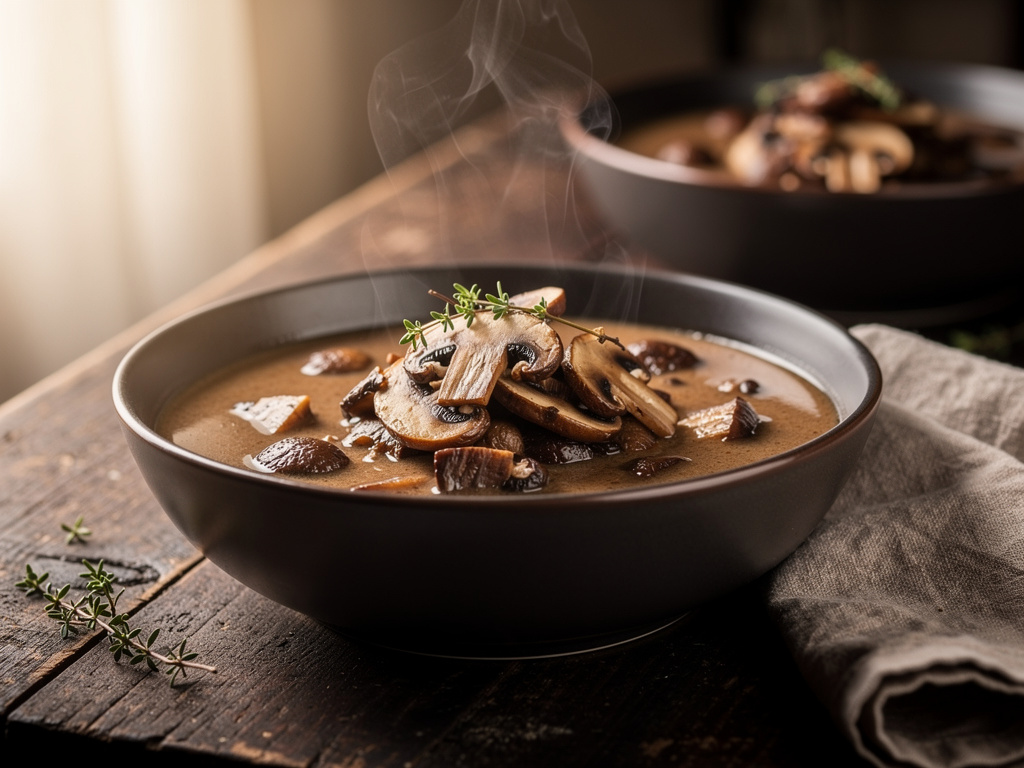
Hot and Sour Mushroom Soup
A tangy, spicy Chinese classic loaded with mushrooms. Bold flavors that wake up your taste buds....
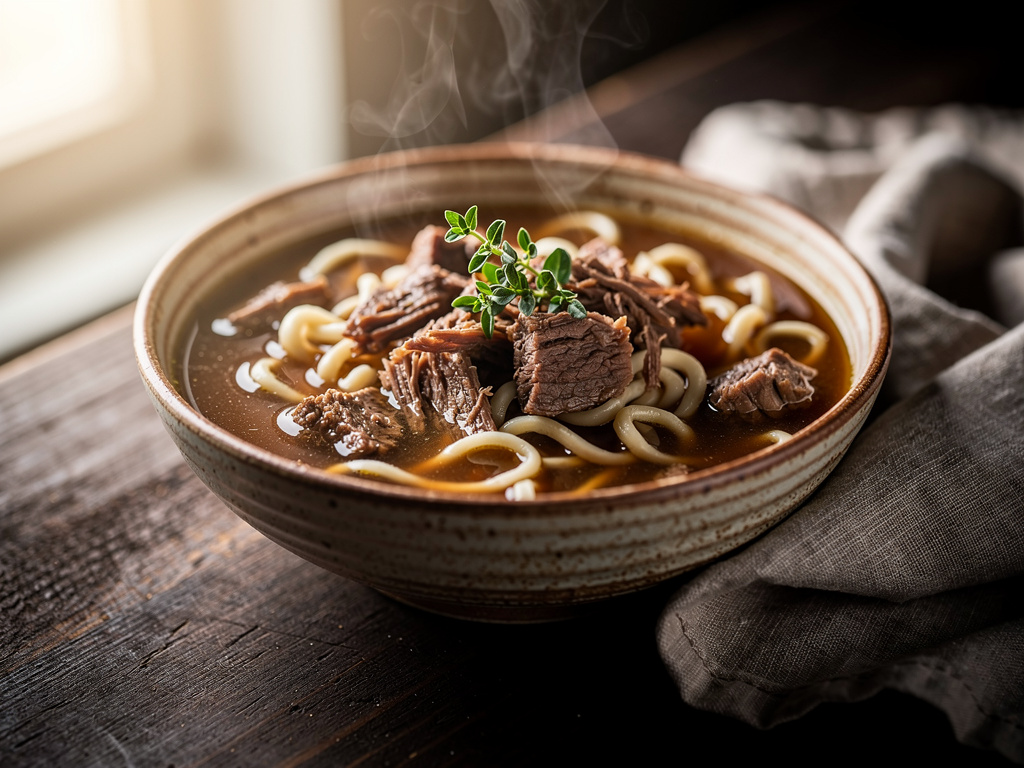
Shredded Beef and Rice Noodle Soup
Rich Chinese-style soup with slow-braised beef, aromatic star anise, cinnamon, and orange peel, serv...