
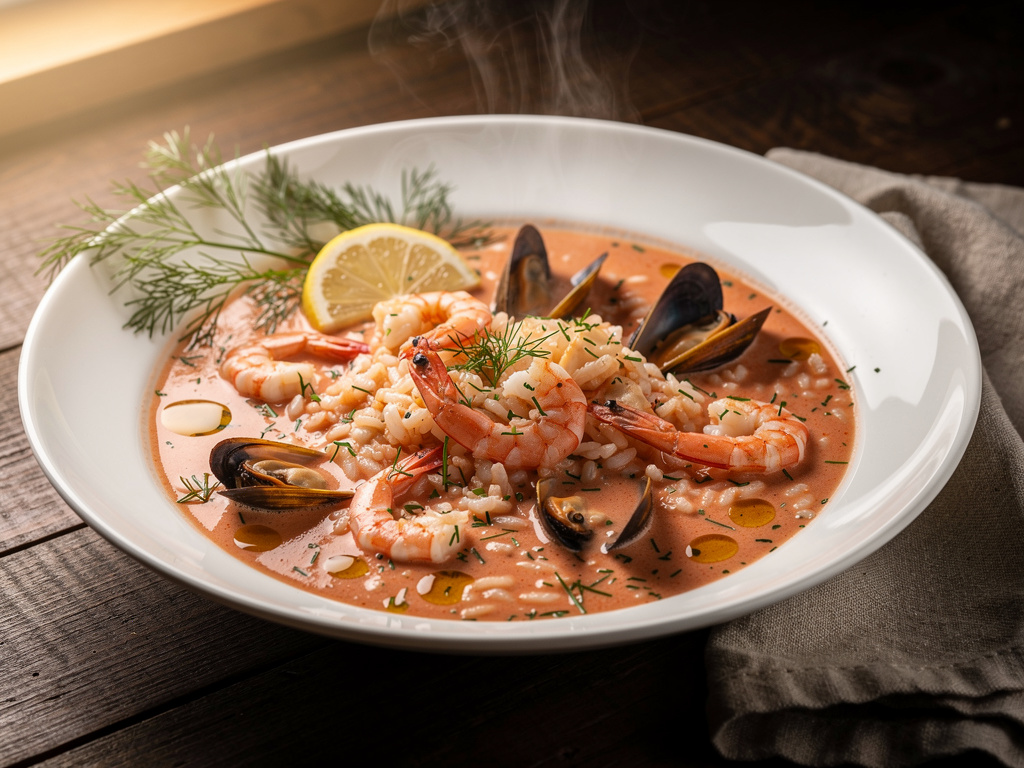
Sopa de Arroz y Pescado is a hearty Spanish seafood soup that's like paella in soup form. Smoky chorizo adds depth to the tomato-based broth, while calasparra rice absorbs all those wonderful flavors. Topped with seared salmon, prawns, and squid, it's a complete meal that celebrates Spain's love affair with the sea.
This soup shares many flavors with paella - the chorizo, rice, seafood, and tomatoes - but in a more casual, comforting format. It's perfect for when you want those iconic Spanish flavors without the fuss of traditional paella.
Paella's Soupy Cousin
If you love paella but don't want to fuss with achieving the perfect socarrat (the crispy bottom), this soup delivers the same satisfaction with much less stress. The rice absorbs the chorizo-infused broth, becoming richly flavored, while the seafood stays tender and perfectly cooked.
Like paella, this soup is all about layering flavors. The chorizo renders its smoky, paprika-laced fat into the base. The aromatics - onion, garlic, carrot - build the foundation. The tomatoes add sweetness and acidity. And the seafood, seared separately to preserve its texture, brings it all together.
The Role of Chorizo
This recipe uses fresh chorizo (raw cooking sausage), not cured chorizo (the dry, sliceable kind). The difference matters: fresh chorizo releases its fat and paprika oils as it cooks, infusing the broth with smoky, spicy depth. Cured chorizo won't give you that same richness.
Look for fresh chorizo at your butcher or in the fresh sausage section. If you can only find cured chorizo, dice it small and cook it at the beginning to render as much fat as possible.
Choosing the Right Rice
Calasparra or bomba rice are traditional Spanish varieties with exceptional liquid absorption. They stay al dente even after absorbing lots of broth, unlike long-grain rice which can become mushy. Good substitutes include:
- Arborio rice: Italian risotto rice with similar starch content
- Carnaroli rice: Another Italian option, slightly firmer than arborio
- Short-grain sushi rice: Works in a pinch
Avoid basmati or jasmine rice - they don't have the same starch that gives this soup its slightly creamy quality.
The Magic of Orange Zest
A teaspoon of orange zest might seem like an unusual addition, but it's a traditional Spanish technique that works beautifully with seafood. The citrus oils add a subtle brightness that lifts the rich, smoky flavors without making the soup taste like oranges. It's the kind of ingredient people can't quite identify but definitely notice is missing when it's not there.
Tips for Perfect Spanish Seafood Rice Soup
- Fresh chorizo: Use raw cooking chorizo, not cured, for the best flavor
- Sear separately: Cooking seafood in a hot pan ensures perfect texture
- Rice timing: The rice should be al dente - slightly firm in the center
- Don't overcook: Add seafood at the very end to keep it tender
- Orange zest: Don't skip it - it adds essential brightness
Garnishing Traditionally
The traditional garnish of chopped hard-boiled egg might seem unusual, but it's a classic Spanish touch. The egg adds richness and protein, and it looks beautiful scattered over the red-orange broth. Fresh parsley provides color and freshness.
Make-Ahead Tips
The base (broth with chorizo, vegetables, and rice) can be made several hours ahead. When ready to serve, reheat the base to a simmer, then sear the seafood fresh and add it to the soup. This makes it perfect for entertaining - do the prep work ahead, then finish in just a few minutes when guests arrive.
Sopa de Arroz y Pescado (Spanish Seafood Rice Soup)
Authentic Spanish seafood and rice soup with salmon, prawns, squid, and chorizo in a rich tomato broth. Like paella in soup form - a complete, satisfying meal.
Nutrition per serving
Ingredients
Instructions
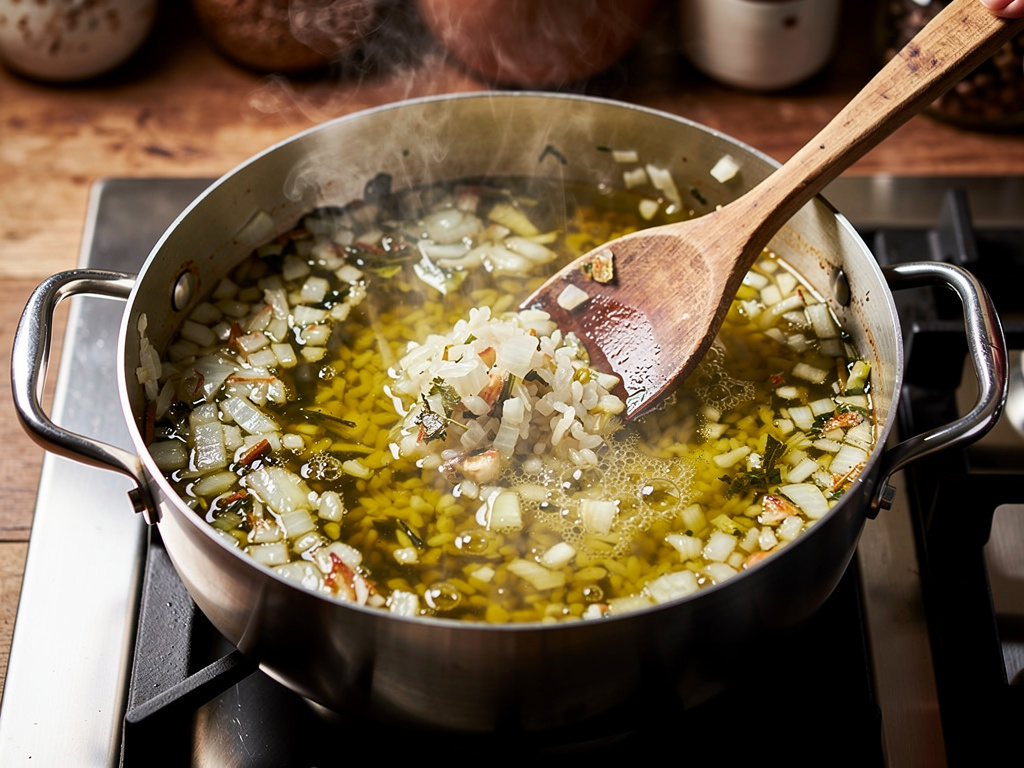
- Cook base. Sauté onion, garlic, chorizo, carrot, and orange zest for 10 minutes.
- Add liquids. Add stock, tomato, and rice. Simmer 15 minutes until rice is al dente.
- Cook seafood. Sear seafood in remaining oil. Stir into soup and simmer 1 minute.
- Serve. Ladle into bowls and garnish with parsley and egg.
Recipe Notes
- Rice alternatives: Bomba rice or short-grain risotto rice work well.
- Add saffron: A pinch of saffron bloomed in the stock makes it even more authentic.
- Mussels: Add cleaned mussels in the last 3-4 minutes for extra seafood.
- Make ahead: Base can be made ahead; sear and add fresh seafood when serving.
More Seafood Recipes
Hot and Sour Beef Soup with Lime
Aromatic Thai-inspired soup with charred beef fillet, fragrant lemongrass and coriander broth, fresh...
Seafood and Pasta Soup
Rich Mediterranean-style seafood soup with tender white fish, prawns, risoni pasta, and fresh tomato...
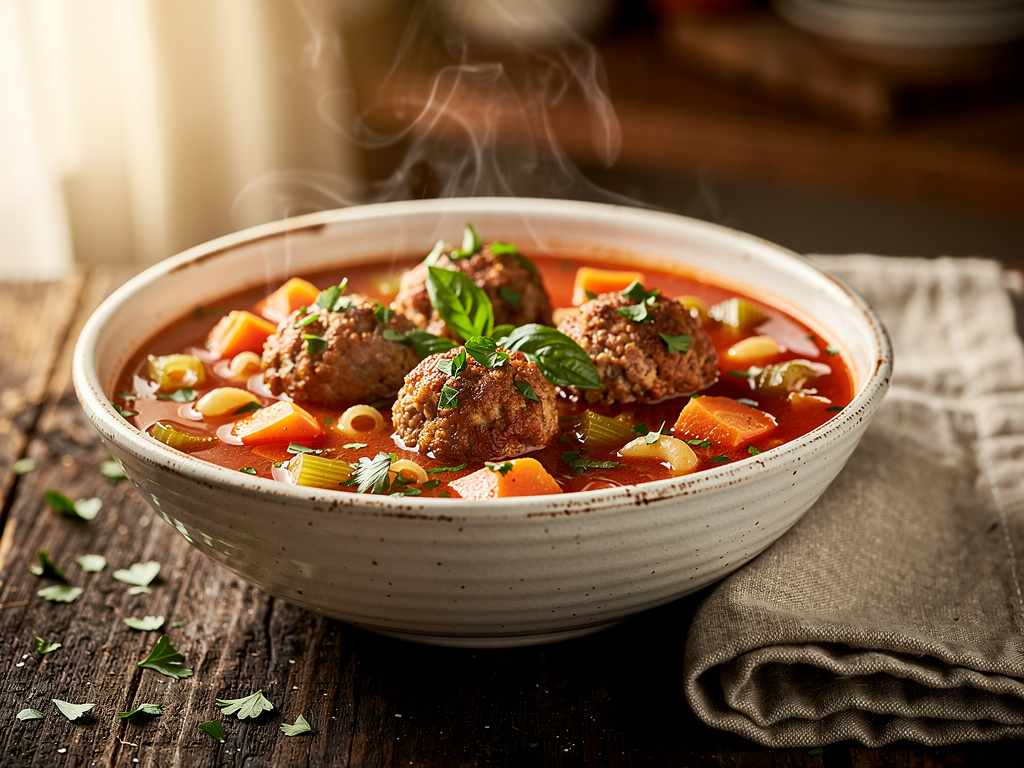
Italian Meatball Soup
Tender beef meatballs in a rich tomato broth with risoni pasta, zucchini, and green beans. A hearty ...