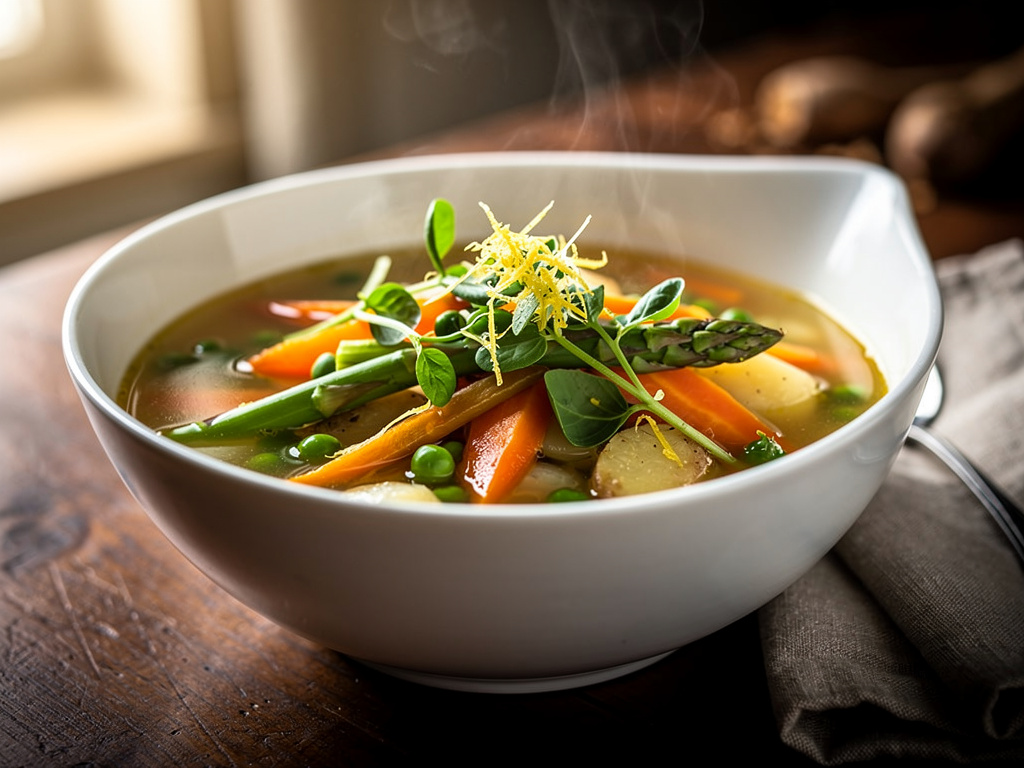
There's something magical about that first warm day when you can almost smell the earth awakening, and suddenly every vegetable in the grocery store seems to whisper "spring." This Spring Vegetable Soup captures that exact moment—when tender asparagus spears finally appear alongside bright green peas, and the harsh bite of winter leeks mellows into something sweet and welcoming. It's not just another vegetable soup; it's liquid sunshine in a bowl, finished with a surprising burst of fresh mint that transforms ordinary ingredients into something extraordinary.
What makes this particular soup so special is its distinctly American approach to spring cooking—taking inspiration from French techniques but embracing the abundance and accessibility of seasonal American produce. Unlike heavy European spring soups that rely on cream or complex stocks, this recipe celebrates the pure, clean flavors of vegetables at their peak. The addition of fresh mint, borrowed from Mediterranean traditions, creates a bridge between comfort and freshness that feels both familiar and exciting.
The Art of Layered Spring Flavors
The genius of this soup lies in its careful orchestration of cooking times and flavor development. Starting with butter and leeks creates a sweet, aromatic foundation that French chefs call a "fondue"—not the cheese kind, but a gentle cooking method that coaxes maximum sweetness from the vegetables without browning. This technique is crucial because it allows each subsequent ingredient to shine without competing flavors. The potato isn't just filler here; it acts as a natural thickener and provides earthiness that grounds all those bright spring flavors. When you add the asparagus first, then peas, you're ensuring each vegetable retains its distinct texture and color—the asparagus stays crisp-tender while the peas burst with sweetness.
Key Ingredients & What Makes Them Special
The star trio of this soup deserves special attention. Leeks are the unsung heroes, providing a subtle onion flavor that's more sophisticated and less aggressive than regular onions. When selecting leeks, look for ones with bright white bottoms and firm green tops—the white and light green parts used here offer the perfect balance of flavor and tenderness. Asparagus brings both texture and a distinct grassy sweetness that screams spring. Choose spears that are firm with tight tips; thicker spears actually work better in soup than thin ones because they hold their shape during cooking. Finally, fresh peas add natural sweetness and that pop of vibrant color. If you're using frozen peas, add them straight from the freezer—they'll cook perfectly in the hot broth without becoming mushy. The fresh mint isn't just garnish; it brightens the entire soup and adds an unexpected coolness that makes each spoonful more interesting than the last.
Pro Tips for the Best Results
- Don't rush the leek cooking phase—those five minutes of gentle sautéing are crucial for developing sweetness and eliminating any harsh bite
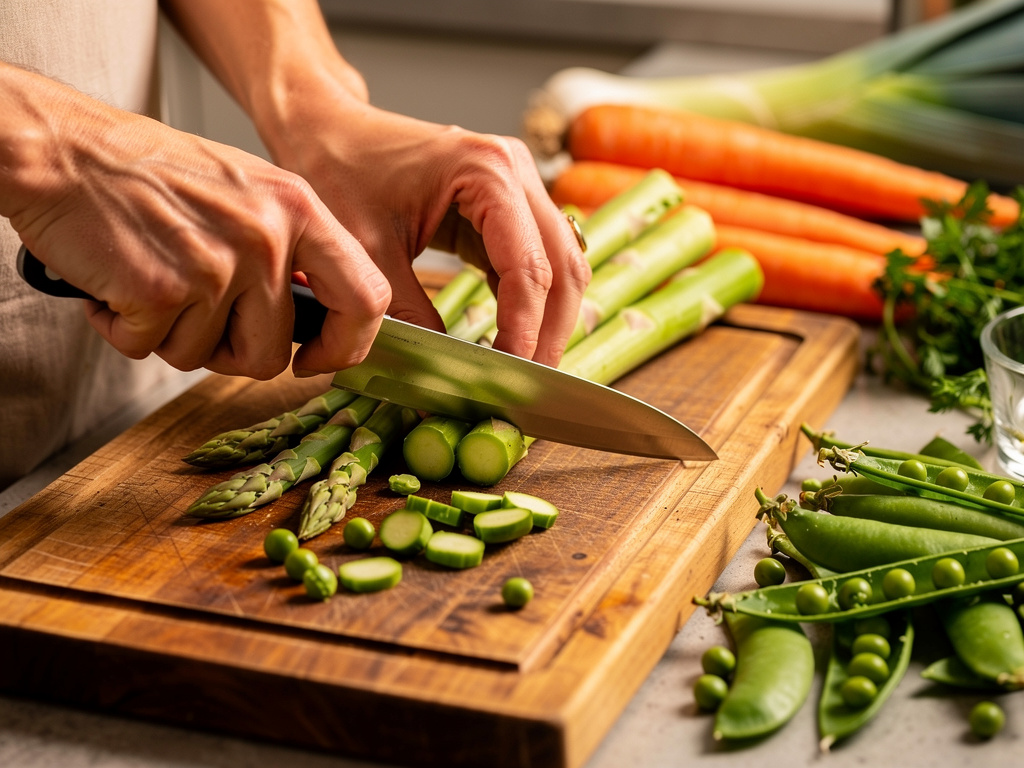
- Cut your asparagus on the diagonal for more surface area and faster, more even cooking
- Add the lemon zest with the mint at the end—heat will make it bitter, but stirring it in just before serving preserves those bright citrus oils
- Taste your broth first—if it's very salty, reduce the cooking liquid slightly before adding vegetables to concentrate flavors without over-salting
- Keep some vegetables slightly underdone—they'll continue cooking in the hot broth even after you remove it from heat
Variations & Substitutions
This soup is wonderfully adaptable to dietary needs and ingredient availability. For a vegan version, simply substitute olive oil for butter—use about 2 tablespoons and add a pinch of salt to help the leeks caramelize. Green onions can replace leeks if needed, though use only the white parts and reduce cooking time to 2-3 minutes. Frozen artichoke hearts make an excellent substitute for asparagus, while sugar snap peas or snow peas can replace regular peas—just slice them thinly first. For added protein, white beans or cannellini beans work beautifully; add them with the peas so they just warm through. Fresh basil or chives can substitute for mint, though each brings its own personality to the dish.
Serving Suggestions
This light, fresh soup pairs beautifully with crusty sourdough bread or simple herb crackers. For a more substantial meal, serve alongside grilled cheese made with sharp cheddar and fresh herbs, or top with a dollop of Greek yogurt and toasted pine nuts. The soup's bright flavors make it an excellent first course before roasted chicken or grilled fish. For entertaining, consider serving in small bowls as an elegant starter, garnished with a few pea shoots or microgreens for visual appeal.
Storage & Make-Ahead Tips
This soup keeps beautifully in the refrigerator for up to four days, though the vegetables will soften slightly over time. Store in airtight containers and reheat gently to preserve the bright colors and fresh flavors. You can prepare the base (everything through cooking the potato) up to two days ahead, then add the asparagus and peas when reheating. The soup freezes well for up to three months, but add fresh mint and lemon juice after thawing for the best flavor impact. When reheating, do so slowly over medium-low heat to prevent the vegetables from breaking down, and always add a splash of fresh lemon juice to brighten flavors that may have dulled during storage.
Spring Vegetable Soup
Light, fresh soup celebrating spring with asparagus, peas, leeks, and fresh mint. Bright seasonal flavors.
Nutrition per serving
Ingredients
Instructions
- . Melt butter in a large pot over medium heat. Add leeks and cook until softened, about 5 minutes. Add garlic and cook 1 minute.
- . Add broth and potato. Bring to a boil, then reduce heat and simmer 10 minutes until potato is tender.
- . Add asparagus and cook 5 minutes. Add peas and cook 2-3 minutes until bright green and tender.
- . Stir in lemon zest, lemon juice, mint, and chives. Season with salt and white pepper.
- . Ladle into bowls and top with a dollop of crème fraîche.
Recipe Notes
- Don't overcook—vegetables should be bright green
- Add herbs off the heat to preserve freshness
- Best served the day it's made
More Spring Vegetable Soup Recipes
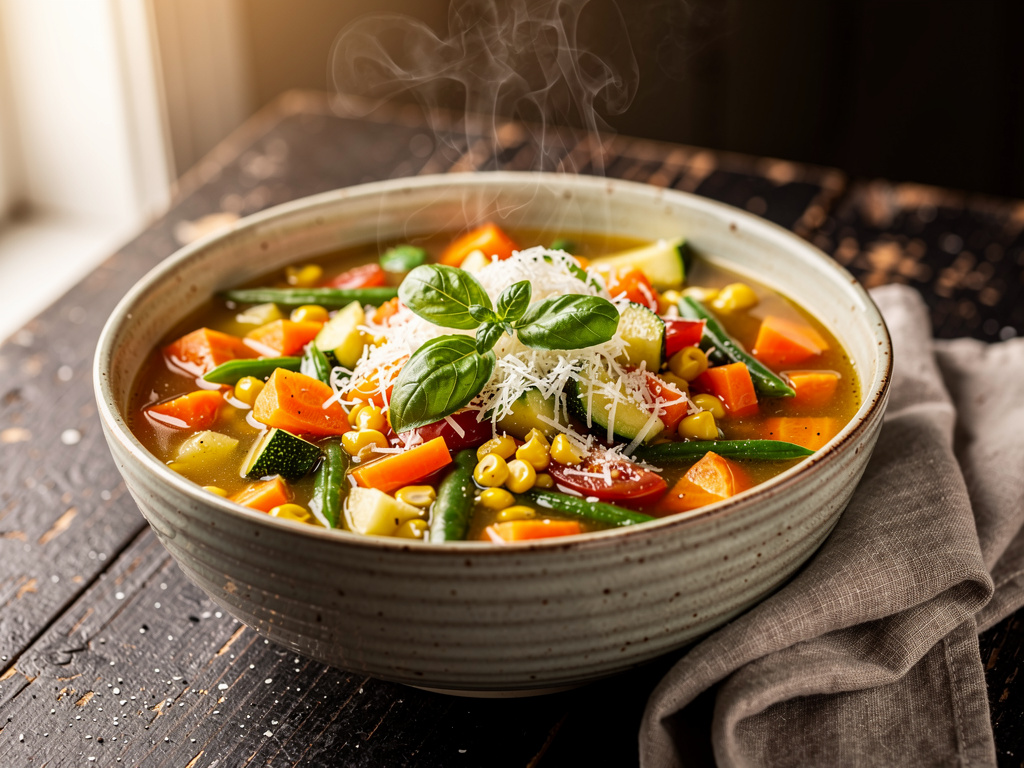
Summer Vegetable Soup
Light, vibrant soup with garden-fresh zucchini, yellow squash, tomatoes, corn, and fresh basil. Peak...
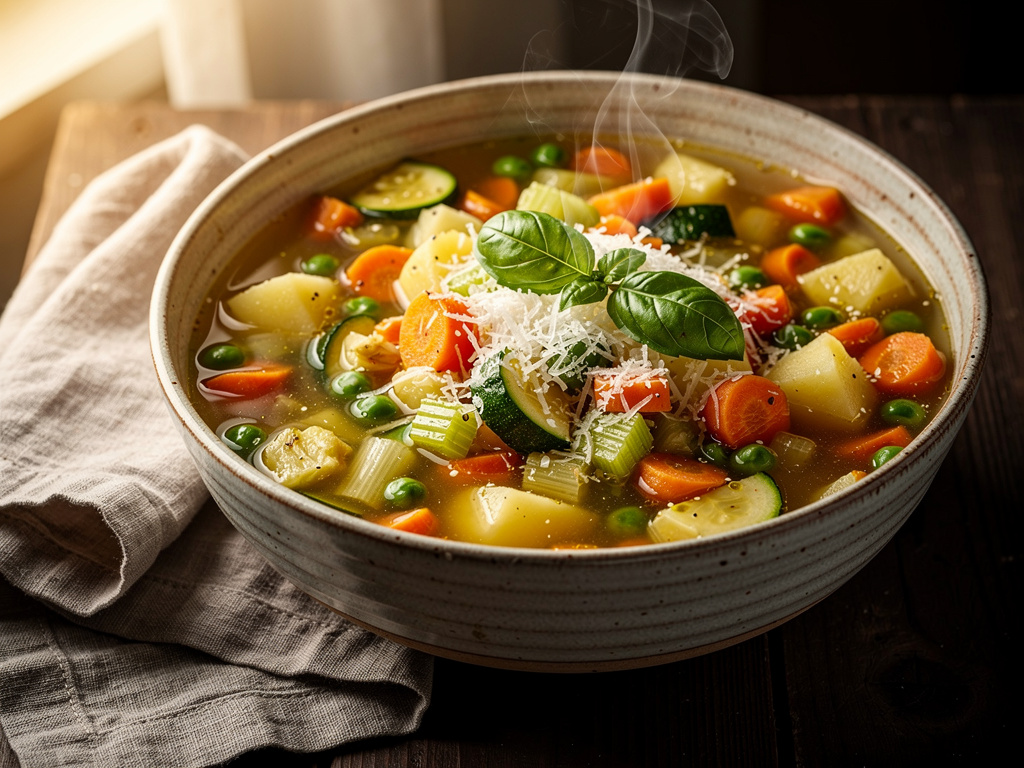
Light Vegetable Soup
Delicate, low-calorie soup with zucchini, yellow squash, spinach, and cherry tomatoes. Brightened wi...
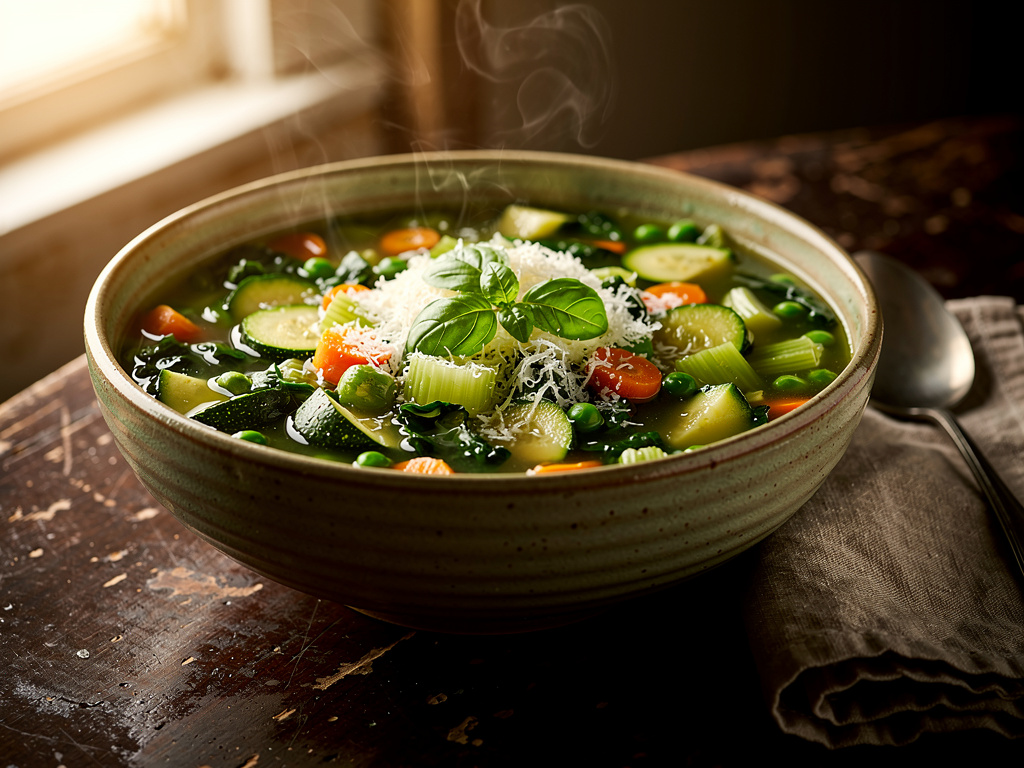
Green Vegetable Soup
Vibrant, nutrient-packed soup with spinach, kale, broccoli, zucchini, and peas. Brightened with lemo...