
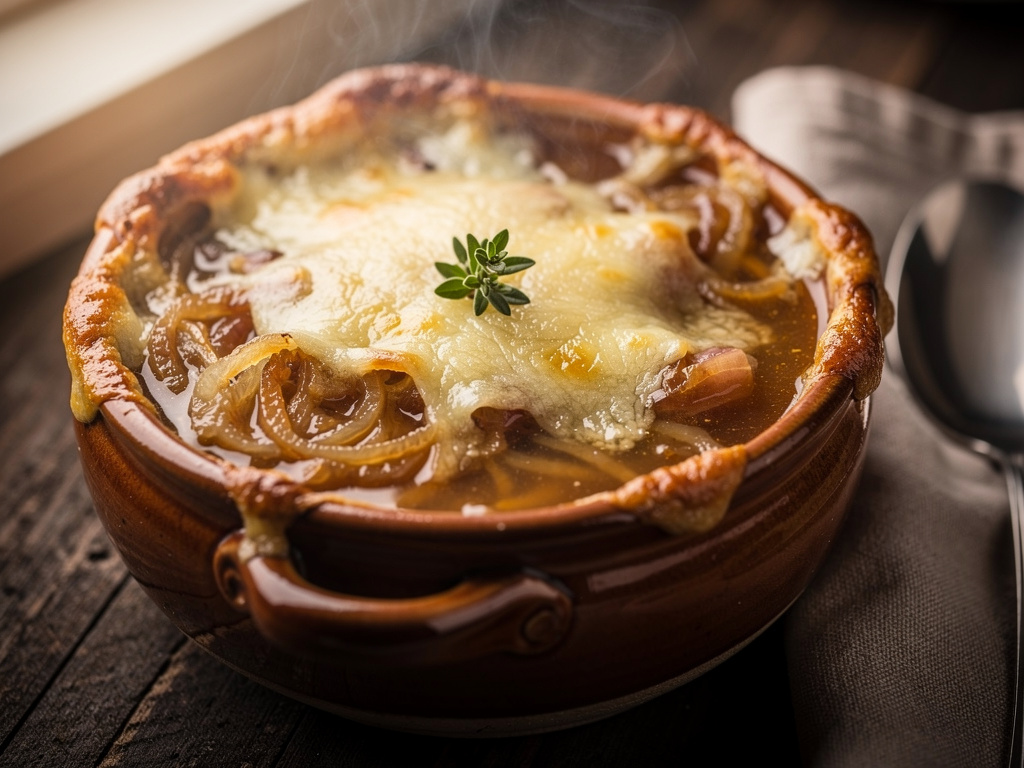
Imagine walking into a rustic French bistro on a cold evening, where the air is thick with the intoxicating aroma of slowly caramelized onions mingling with rich beef broth and aged wine. This Three Onion Soup elevates the classic French onion soup to extraordinary heights by harnessing the unique characteristics of yellow, red, and sweet onions in perfect harmony. Each variety contributes its own personality—the sharp bite of yellow onions, the mild sweetness of red, and the honeyed depth of sweet onions—creating layers of flavor that dance on your palate with every spoonful.
This recipe represents the pinnacle of French comfort cooking, where patience and technique transform humble ingredients into something truly magnificent. Unlike traditional French onion soup that relies on a single onion variety, this three-onion approach mirrors the complexity found in fine wine blending, where different grape varieties combine to create something greater than the sum of its parts. The slow, careful caramelization process that takes a full thirty minutes isn't just cooking—it's alchemy, transforming sharp, pungent onions into sweet, golden ribbons that form the soul of this exceptional soup.
The Magic of the Thirty-Minute Caramelization
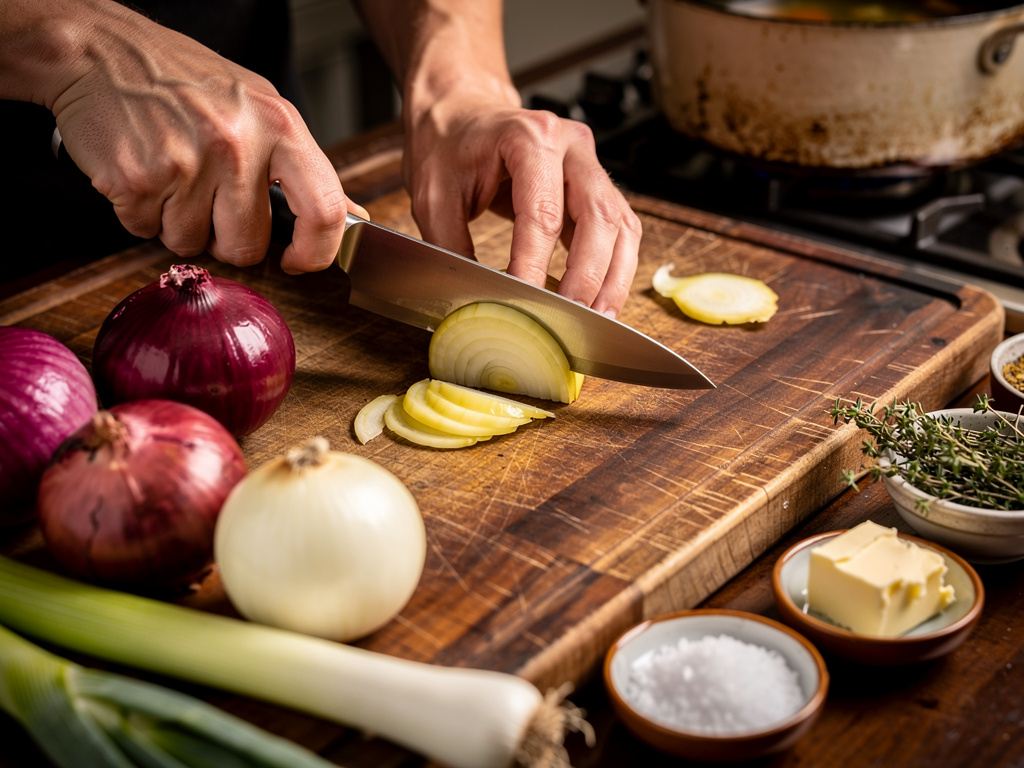
The secret to this soup's extraordinary depth lies in the extended caramelization process that transforms three pounds of onions into silky, amber-colored strands. When you cook yellow, red, and sweet onions together for thirty minutes in butter, you're not just softening them—you're coaxing out their natural sugars through the Maillard reaction. The yellow onions provide a sharp foundation, the red onions contribute earthy undertones, and the sweet onions add natural caramelization that helps the entire mixture achieve that coveted golden-brown color faster. This trinity creates a complex flavor base that would be impossible to achieve with just one onion variety.
Key Ingredients & What Makes Them Special
The butter in this recipe isn't just fat—it's the medium that allows the onions to caramelize without burning, providing richness while preventing the high-heat browning that would create bitter notes. Using four tablespoons ensures adequate coverage for three pounds of onions without making the soup greasy. The red wine reduction that follows the initial caramelization adds crucial acidity and tannins that balance the sweetness of the caramelized onions. When you cook the wine until reduced, you're concentrating its flavors while cooking off the harsh alcohol, leaving behind only the deep, fruity notes that complement the beef broth beautifully.
The Gruyère cheese isn't merely a topping—it's an integral component that adds nutty, complex flavors and creates that signature golden, bubbly crown. This Swiss cheese melts beautifully under the broiler, creating an almost fondue-like layer that contrasts perfectly with the liquid soup beneath. Its sharp, slightly sweet profile harmonizes with the caramelized onions while standing up to the robust beef broth.
Pro Tips for the Best Results
- Slice onions uniformly: Keep slices about ¼-inch thick to ensure even caramelization—thinner slices may burn while thicker ones won't cook through properly
- Don't rush the caramelization: Resist the urge to increase heat; medium-low temperature is crucial for developing sweetness without bitterness
- Scrape up fond regularly: Those brown bits on the bottom of your pot are flavor gold—scrape them up and incorporate them throughout the cooking process
- Reduce wine completely: Cook until the wine is almost completely evaporated to avoid any harsh alcohol notes in the final soup
- Use oven-safe bowls: Individual crocks or ramekins that can withstand broiler heat are essential for achieving that perfect cheese crust
Variations & Substitutions
For a vegetarian version, substitute the beef broth with a rich mushroom or vegetable stock, adding a tablespoon of soy sauce for umami depth. Those avoiding alcohol can replace the red wine with additional broth plus a splash of balsamic vinegar for acidity. If Gruyère isn't available, aged Swiss or even a combination of Parmesan and mozzarella creates an excellent substitute. For dairy-free options, use olive oil instead of butter for caramelization and skip the cheese topping, or use your favorite plant-based cheese alternative.
Consider adding fresh thyme leaves during the last few minutes of cooking for an herbal note, or incorporate a bay leaf during the simmering stage for additional depth. A splash of cognac or brandy added just before serving can elevate this soup to restaurant quality.
Serving Suggestions
This rich, satisfying soup pairs beautifully with a crisp green salad dressed in light vinaigrette to cut through the richness. Serve alongside crusty French bread or a simple baguette for dipping. The soup makes an elegant first course for dinner parties, especially when followed by lighter mains like roasted chicken or grilled fish. A medium-bodied red wine, such as Côtes du Rhône or Pinot Noir, complements the soup's complexity without overwhelming it.
Storage & Make-Ahead Tips
This soup actually improves with time, making it perfect for meal prep. The base can be prepared up to three days ahead and stored in the refrigerator—simply reheat gently before adding the bread and cheese topping. The soup freezes well for up to three months; freeze in individual portions for convenient single servings. When reheating frozen soup, thaw overnight in the refrigerator and warm slowly on the stovetop, stirring occasionally. For best results, add fresh bread and cheese just before serving rather than storing the soup with toppings already added.
Three Onion Soup
Complex soup with three onion varieties.
Nutrition per serving
Ingredients
Instructions
- .
- .
- .
- .
More Onion Soups Recipes
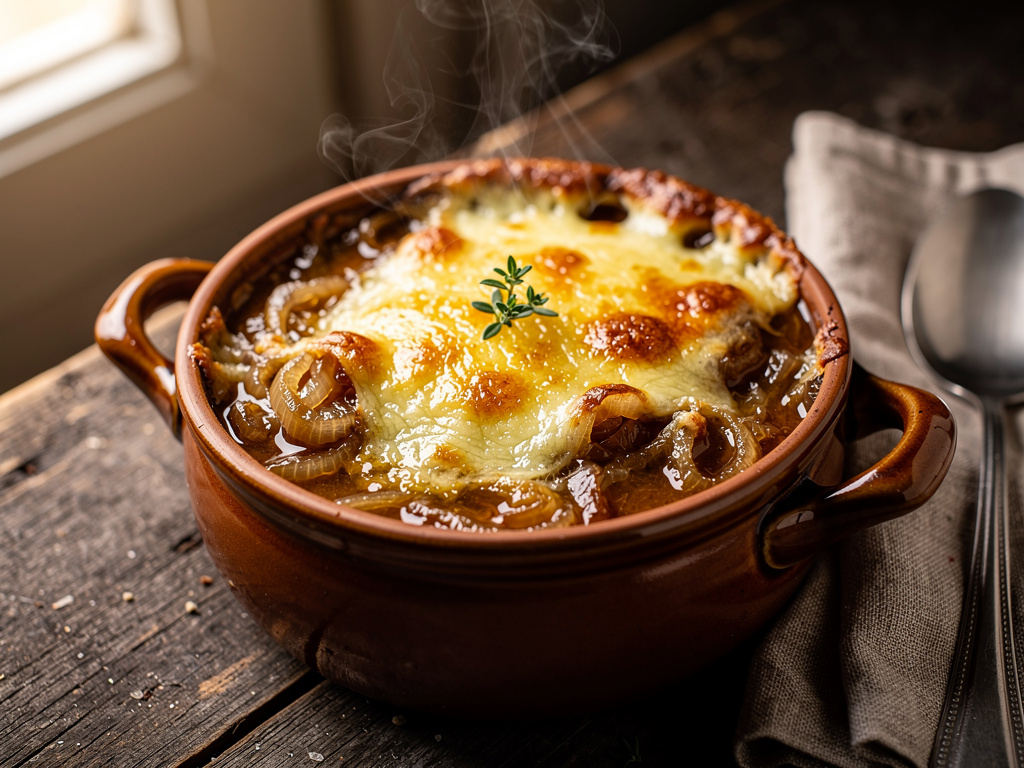
Sweet Onion Soup
Naturally sweet soup with premium sweet onions....
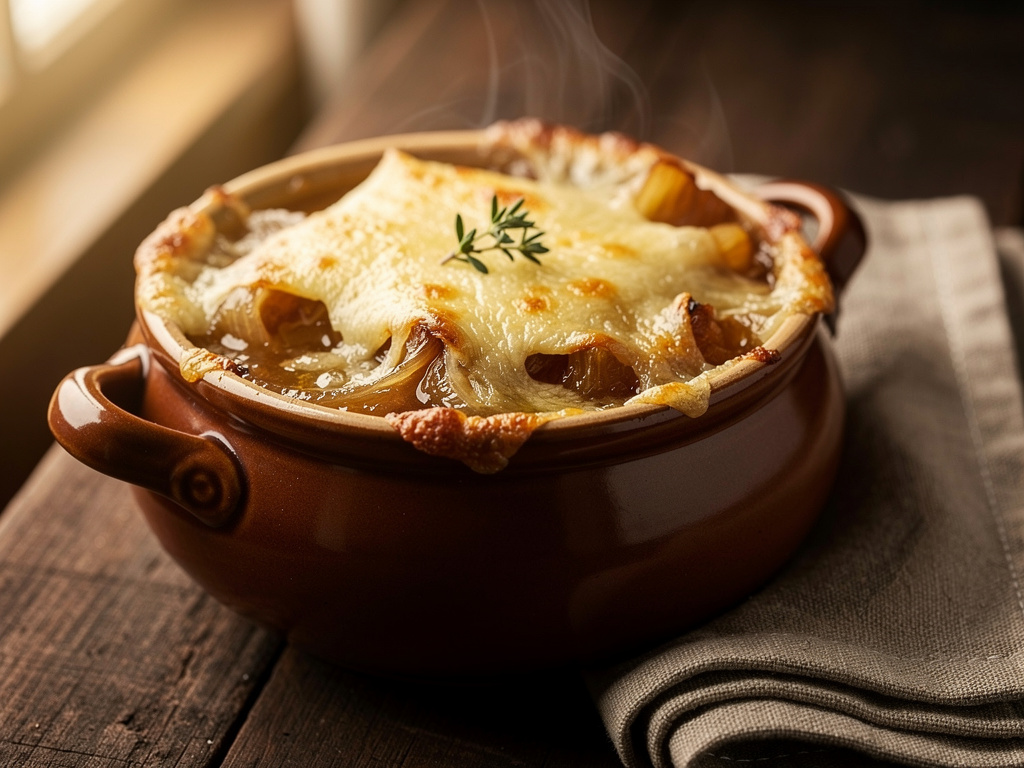
Onion Apple Soup
Unique autumn soup with onions and apples....

Onion Gruyère Soup
A luxurious gratinée soup featuring sweet onions and nutty Gruyère cheese. Swiss-French elegance....