
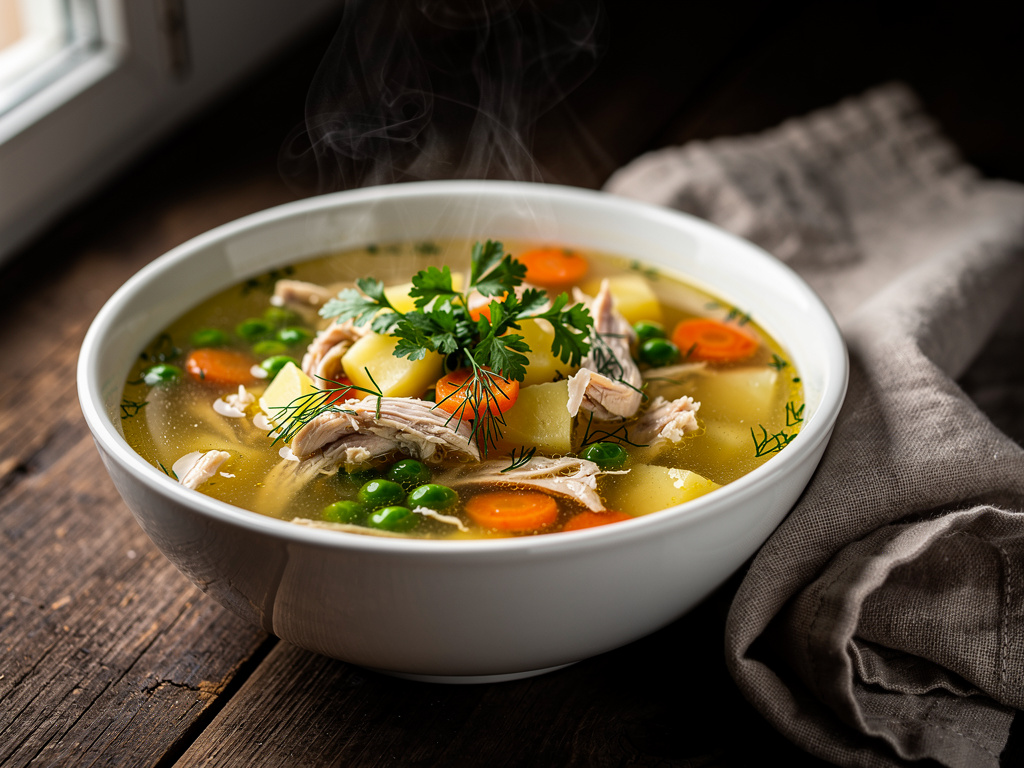
There's something magical about the first taste of spring captured in a bowl, and this Chicken Soup with Peas delivers exactly that promise. Unlike heavy winter soups that rely on rich, creamy bases or robust root vegetables, this bright and vibrant creation celebrates the delicate sweetness of green peas paired with tender, shredded chicken. The fresh lemon juice that finishes each bowl adds a surprising brightness that transforms an ordinary chicken soup into something extraordinary—a liquid embodiment of renewal and freshness that signals winter's end.
This particular style of chicken and pea soup has deep roots in American home cooking, where resourceful cooks learned to stretch ingredients while creating satisfying meals. What makes this version special is its commitment to letting the peas shine as the star ingredient rather than relegating them to a supporting role. The technique of adding the peas in the final minutes of cooking preserves their vibrant color and sweet, fresh flavor—a detail that elevates this soup from cafeteria-style to restaurant-quality in your own kitchen.
Why This Timing Technique Creates Restaurant-Quality Results
The secret to this soup's success lies in understanding cooking times and how they affect each ingredient's contribution to the final dish. By simmering the chicken breast whole for exactly 20 minutes, you achieve two goals: the chicken stays incredibly moist and tender, and it infuses the broth with deeper flavor. The shredding technique that follows creates those perfect, bite-sized pieces that distribute evenly throughout each spoonful. Meanwhile, the three-minute pea cooking window is crucial—any longer and you'll lose that brilliant green color and crisp-tender texture that makes this soup so visually appealing and texturally interesting.
Key Ingredients & What Makes Them Special
The green peas in this recipe are the undisputed stars, whether you choose fresh or frozen. Fresh peas offer unmatched sweetness when in season, but high-quality frozen peas work beautifully year-round and often contain more nutrients than fresh peas that have traveled long distances. The natural sugars in peas complement the savory chicken broth perfectly, creating that balanced flavor profile that makes this soup so satisfying without being heavy.
Fresh lemon juice serves as the flavor brightener that distinguishes this soup from ordinary chicken soups. Added at the very end, it doesn't cook out, maintaining its acidic punch that cuts through the richness of the butter and chicken while enhancing the sweetness of the peas. This technique is borrowed from professional kitchens where a final acid addition is standard practice for balanced, restaurant-quality flavors.
The combination of butter and aromatic vegetables—onion, carrots, celery, and garlic—creates the flavor foundation through proper sautéing. This mirepoix base releases essential oils and develops complexity that water-based cooking simply cannot achieve, making the difference between a flat-tasting soup and one with real depth.
Pro Tips for the Best Results
- Don't skip the vegetable sauté step – cooking the onions, carrots, and celery in butter until softened creates the flavor base that makes this soup taste homemade, not thrown together
- Keep the chicken breast whole during cooking – this prevents overcooking and ensures the meat stays juicy and easy to shred into perfect pieces
- Add peas in the final 3 minutes only – this preserves their bright color, sweet flavor, and slightly firm texture that provides pleasant contrast
- Taste and adjust seasoning after adding lemon juice – the acid will change how you perceive the salt levels, so final seasoning should happen last
- Use room temperature lemon juice – cold lemon juice can lower the soup's serving temperature more than you'd expect
Variations & Substitutions
For a heartier version, add small pasta shapes like ditalini or orzo during the last 8-10 minutes of cooking. Those following a low-carb lifestyle can increase the vegetable content with diced zucchini or cauliflower florets. The butter can be replaced with olive oil for dairy-free diets, though you'll lose some of the rich, comforting flavor that butter provides. Bone-in chicken thighs can substitute for breasts—just increase cooking time to 25-30 minutes and remove bones before shredding. For vegetarians, replace chicken with white beans and use vegetable broth, adding the beans in the last 5 minutes to warm through.
Serving Suggestions
This light soup pairs beautifully with crusty sourdough bread or simple butter crackers that won't compete with its delicate flavors. A small side salad with mixed greens and vinaigrette complements the soup's fresh spring character perfectly. For a more substantial meal, serve alongside grilled cheese sandwiches made with sharp cheddar, or consider herb-crusted dinner rolls that echo the soup's garden-fresh theme. The soup's light nature makes it an excellent first course before roasted chicken or fish dishes.
Storage & Make-Ahead Tips
This soup stores well in the refrigerator for up to four days, but add the peas just before serving if you're meal prepping—they'll maintain better texture and color this way. The base can be made completely ahead and frozen for up to three months; just thaw, reheat, and add fresh peas during the final warming. When reheating, do so gently over medium-low heat to prevent the chicken from becoming tough. The lemon juice should always be added fresh just before serving, as its brightness diminishes over time and with reheating.
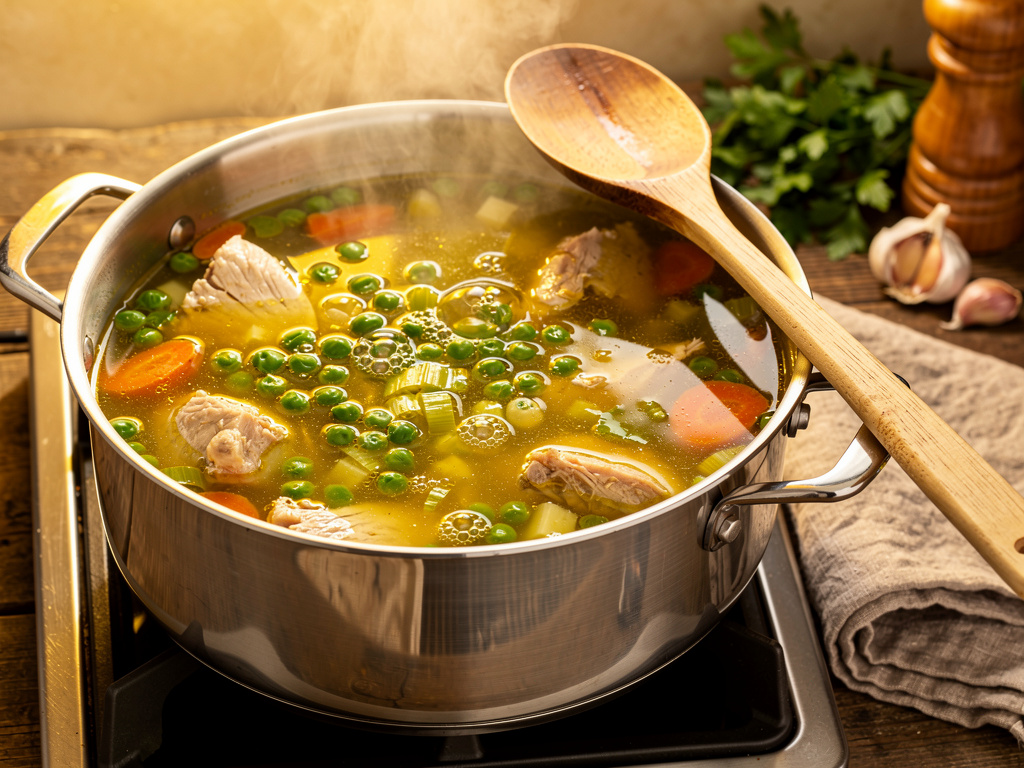
Chicken Soup with Peas
A fresh, springtime soup featuring tender chicken and sweet green peas. Light, bright, and perfect for spring.
Nutrition per serving
Ingredients
Instructions
- . Sauté vegetables in butter.
- . Add broth and chicken. Simmer 20 minutes.
- . Shred chicken. Add peas, cook 3 minutes.
- . Finish with lemon and mint.
Recipe Notes
- Fresh peas: If using fresh, shell right before cooking.
- Creamy version: Blend half the peas before adding for creaminess.
- Add pasta: Small pasta shapes make it more substantial.
- Storage: Refrigerate 4 days. Peas may soften.
More Chicken Soups Recipes
Chicken Soup with Spinach
A light, nutritious soup featuring tender chicken and vitamin-packed fresh spinach. Healthy comfort ...
Chicken Soup with Zucchini
A light, garden-fresh soup featuring tender chicken and summer zucchini. Perfect for using up your g...
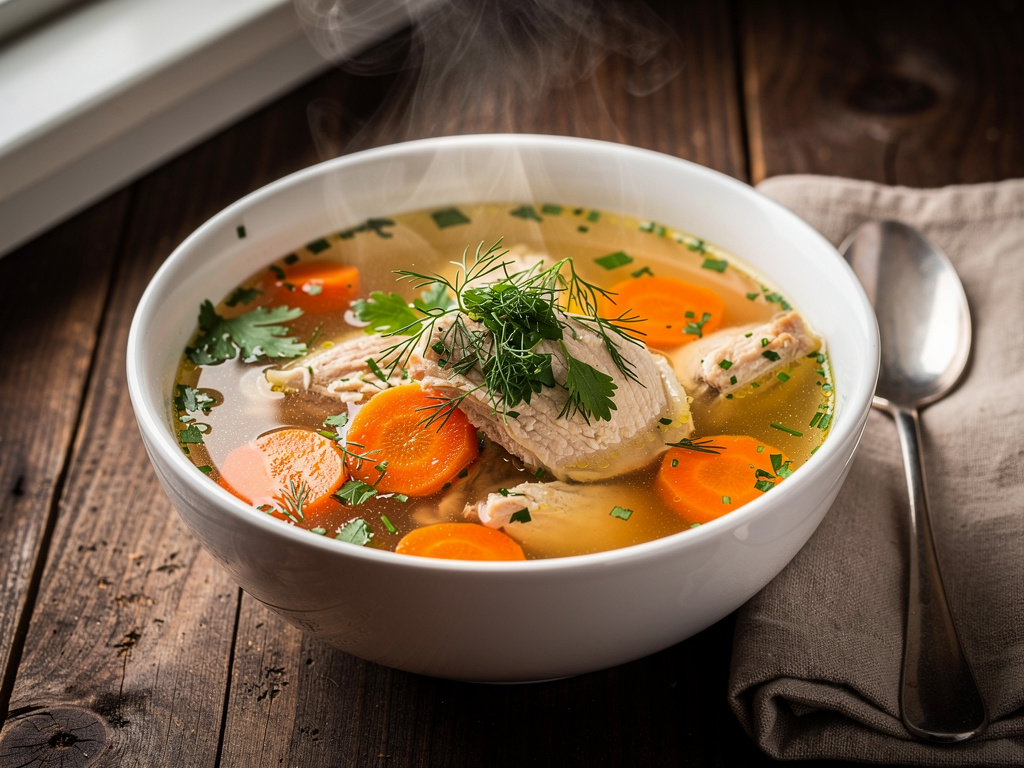
Chicken Soup with Carrots
A naturally sweet, vibrant soup featuring tender chicken and lots of carrots. Classic comfort with e...